

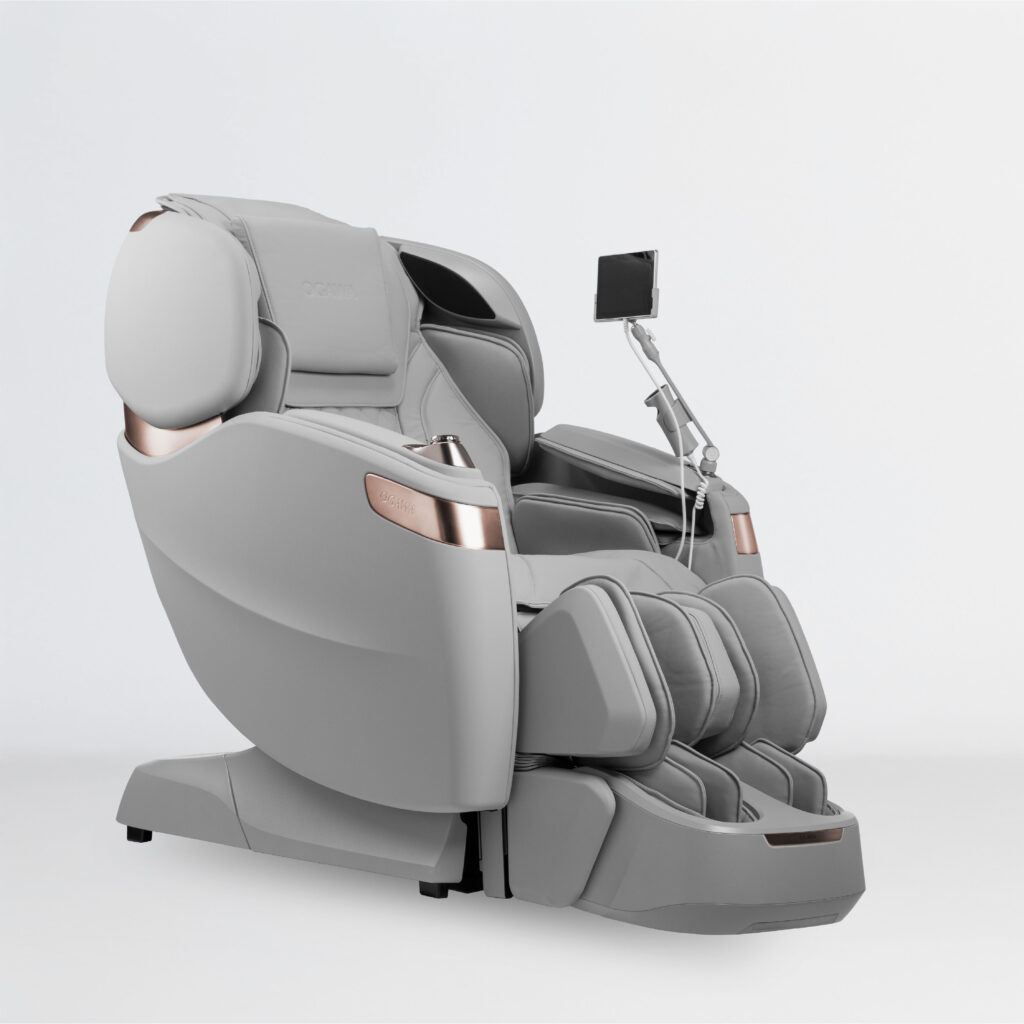






Massage Chair
Massage Chairs in Practice: Observations from Supply, Usage, and Expectation

The existence of massage chairs has transcended the boundaries of dedicated healing spaces to offices, communal places, and homes. There is no set formula involved in this progression. It involves elements of availability, distribution networks, and altered perceptions towards passive healing devices.
In purchase contexts, the choice of products is typically determined by information provided in specification sheets instead of actual use. This means that the process relies upon descriptions of technical aspects that have been reduced to easy-to-read terms. For example, track type, pressure methods, or reclining angles seem the same in descriptions despite varying underlying structures.
Procurement Behavior and Specification Patterns
In situations where bulk sourcing is involved, evaluation remains a documentation-based process. This results in the frequent recurrence of processes used in comparing and selecting massage chairs.
Specs grouping is common in such cases. Various manufacturers group several internal systems using one name, despite differences in their structure. While this makes for easy comparison, the mechanical differences remain unclear.
Rebranding models is another practice that occurs in such environments. The base model takes different names, depending on agreements between distributors. Comparison across markets becomes difficult especially when two models have identical mechanical structures.
The pricing of the units is usually determined by their features’ visibilities. The higher number of features, the higher the price expectations.
Manufacturing Structure and Component Layers
The construction of massage chairs normally involves several layers of manufacturing process as opposed to a single unit manufacturing process. While the external framework might be constant, the internal assemblies might change according to source and manufacturing cycle.
Four layers of construction may be identified for the systems:
- Mechanical system for control of roller movements and alignment of tracks
- Pneumatic system for the control of airbags and compression processes
- System Control System involving firmware and interface management
- Load-bearing framework
This is because the four layers of construction may not be necessarily manufactured simultaneously and may come from diverse sources. Each layer could have come from different sources even within a particular line of models.
The manufacturing process itself might lead to changes in internal composition after a certain period when a new model is manufactured. However, the model name may be retained despite changes in the manufacturing process.
Usage Patterns in Residential Environments
Furniture use in home settings is typically sporadic in nature. Usage sessions are brief and intermittent in nature, not conducted within a programmed routine.
Repetition of the modes chosen for use is typically confined to those favored by the user. Others go unused after their first utilization. This results in uneven wear on designated areas of the furniture that are subjected to repetitive pressure.
Maintenance too occurs at sporadic intervals, depending on the circumstances and needs at any particular time.
Commercial Deployment and Operational Load
Commercial environments introduce more consistent operating conditions. Massage chairs in these settings often run in continuous cycles with minimal idle time.
Three patterns tend to appear:
- Repeated back-to-back sessions across the day
- Variation in user body types affecting pressure distribution
- Scheduled maintenance rather than incidental upkeep
Under these conditions, mechanical consistency becomes more apparent. Differences in component tolerance tend to appear earlier due to sustained use.
This does not indicate reduced durability. It reflects the difference between intermittent and continuous operation.
Interface Design and User Interaction
Control systems can range from remotes to digital interfaces. Interface design affects interaction with the device.
Preprogrammed options are commonly utilized. People prefer preset options over manually setting each variable.
Manual controls are still accessible, yet they are rarely employed. Complicated menu structures might not be fully explored initially.
It appears that simpler interfaces are utilized consistently within public spaces.
The availability of sophisticated controls does not imply their actual use.
Supply Continuity and Model Lifecycle
Massage chair models do not follow a uniform lifecycle. Some remain in circulation for extended periods with minor adjustments, while others are replaced within shorter intervals.
This affects several aspects:
- Replacement part availability
- Firmware consistency
- Batch-level variation
In procurement environments, this leads to partial standardization. Multiple units under the same model name may differ slightly in internal configuration depending on production timing.
These differences are not always documented in retail descriptions.
Conclusion
The massage chair is positioned somewhere between a personal commodity and a mechanical device. Its performance is dictated by the combination of its design, components, and use context rather than by any fixed benchmark.
In varying contexts, diversity is not an aberration but rather the norm. The classification remains dynamic due to gradual modifications rather than consistent transformation.
You can review further details, model variations, and current configurations through the available listings on the Irelax Website. Additional product-level information remains accessible through the main catalog and related sections.
FAQ Section
- Do all massage chairs function the same internally?
Massage chairs may look similar, but what’s inside makes all the difference. From roller systems to control technology, higher-quality engineering delivers a smoother, more comfortable, and more effective massage experience. These differences directly impact how the massage feels — including comfort, precision, and how well the chair adapts to your body. That’s why choosing the right brand matters just as much as choosing the right features.
- Why do similar models behave differently over time?
Differences in usage patterns, maintenance routines, and component variation influence long-term behavior. - Are all listed features commonly used?
Observed usage shows that many users rely mainly on preset programs, with other features used less frequently. - Does commercial use change performance patterns?
Continuous operation and varied user interaction in commercial environments reveal mechanical differences more quickly. - Can the same model differ across regions?
Yes. Rebranding and distribution structures may cause naming differences and minor configuration changes.